Best Dance Competition Hairstyles for Ballet, Jazz, Hip Hop & More (2026)
Dance competition day is your moment to shine — and that means every detail counts, including your hair. The right hairstyle doesn’t just look good; it stays in place through intense choreography, stage lights, and hours of performance. Whether you’re a dancer preparing for regionals, nationals, or a professional race, this guide covers the best dance recital hairstyles for jazz, hip hop, ballet, contemporary, and other dance types, as well as easy styles for kids and toddlers.
Best Jazz Dance Hairstyles for Competition (2026)
Jazz dance calls for bold, expressive energy — and your hair should match. Competition hairstyles for jazz are often sleeker and more sculptural than ballet styles, with an emphasis on drama and movement. Whether you’re competing in a regional showcase or a national competition, the right jazz hairstyle frames your features, projects confidence, and stays locked in through sharp isolations, head tilts, and high-energy choreography. Every competitive jazz routine has one thing in common: movement. The best jazz competition hairstyles are ones that can handle isolations, head tilts, and sharp directional changes without shifting, loosening, or distracting from the choreography. Here’s what the winners are actually wearing on stage.
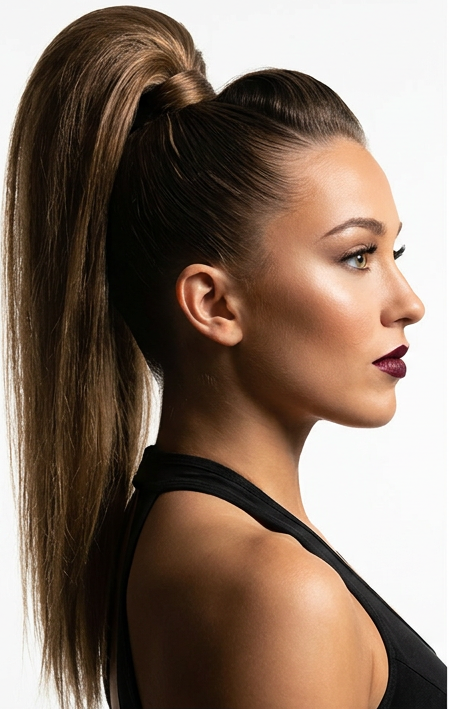
1. Sculptural Slicked-Back Ponytail
This jazz hairstyle features hair pulled back tightly and secured in a high ponytail with a sculptural swoop across the crown. The look is bold, graphic, and reads clearly from the back row of the audience. It’s particularly effective for upbeat jazz pieces that call for sharp, dynamic movement. The sleek surface catches stage lighting beautifully.
Best For: High-energy jazz pieces, group numbers, teen and adult competitions
Hair Type: All hair types; gel or pomade creates shine on fine hair
Step-by-Step:
Apply strong-hold gel to damp hair from roots to ends
Comb hair back smoothly with a tail comb
Secure with a hidden elastic band at the crown
Smooth the crown with a Velcro roller for volume
Set with aerosol hairspray
Pro Tip: Flip the ponytail forward and back-comb slightly for extra height — this adds drama and helps judges see your silhouette from every angle.
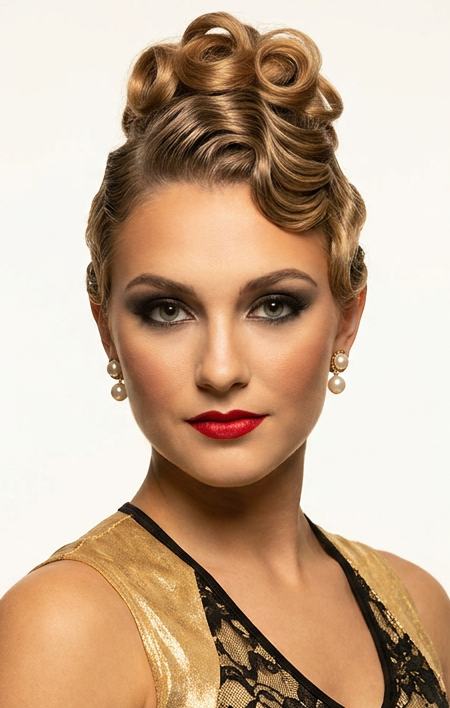
2. Art Deco Finger Wave Updo
Inspired by 1920s-30s Hollywood glamour, the finger wave updo features sculpted S-curves pressed flat against the head, transitioning into a rolled bun or shape at the crown. This hairstyle is the ultimate showstopper for vintage-style jazz numbers, Broadway-inspired routines, or any piece that calls for old-Hollywood glamour. The sculptural waves add sophistication and visual drama.
Best For: Vintage jazz, Broadway jazz, competition showcase pieces
Hair Type: Medium to long; short hair can use a temporary wave spray to prep
Step-by-Step:
Apply wave-setting lotion or mousse to damp hair
Create deep S-curves with fingers and a fine-tooth comb
Pin each wave in place with duck-bill clips
Let dry completely (or use a cool dryer)
Remove clips and smooth the waves
Create a sleek bun or shape at the crown
Set with freeze-hold hairspray
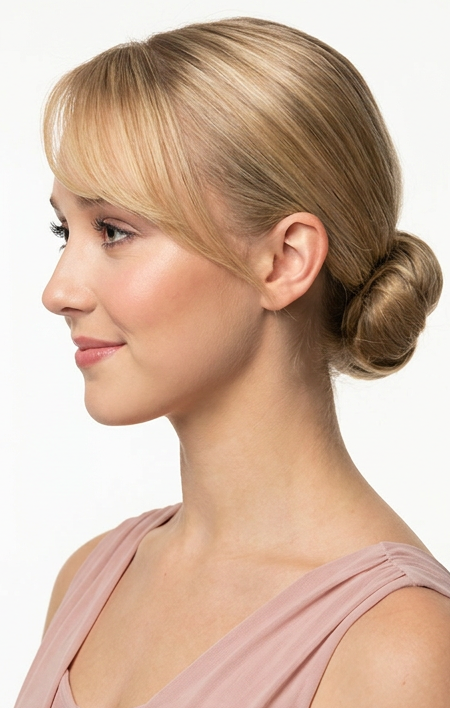
3. Sleek Low Bun with Sideswept Fringe
This streamlined jazz hairstyle keeps hair ultra-smooth with hair pulled back from the face and swept to one side, fixed at the nape or crown with a low bun. The swept fringe or face-framing pieces add softness and femininity to an otherwise structured look. This style works beautifully for lyrical jazz pieces or contemporary numbers where the dancer’s face is the focus.
Best For: Lyrical jazz, contemporary jazz, solo performances
Hair Type: All types; works especially well with natural fringe or bangs
Step-by-Step:
Flat-iron hair if needed for smoothness
Sweep hair to the preferred side
Create a low side ponytail
Form a small, neat bun at the base
Leave a face-framing section loose and pin it to sweep across the forehead
Set with an anti-humidity spray
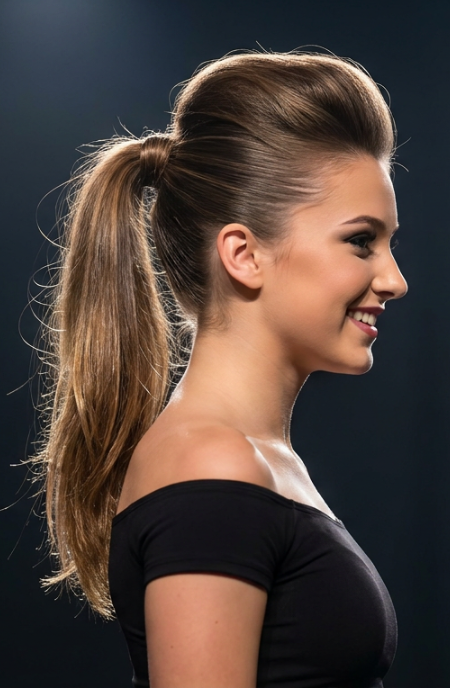
4. High Pompadour Ponytail
The gold standard for high-energy jazz routines. Volume is built at the crown using a backcombing technique or a pompadour pad, then the hair is swept back into a sleek ponytail. The height at the front draws attention to the face and creates a strong, confident silhouette that reads well from the back of a large venue.
Advantages:
The volume counterbalances the visual weight of sharp arm lines and creates an unbroken vertical line from head to toe — a principle judges look for in strong jazz presentation.
5. Half-Up Textured Bun
The top half of the hair is gathered into a loose, textured bun while the bottom half stays down in soft waves or curls. This hybrid look offers the security of an updo with the visual softness that complements lyrical or emotive jazz pieces.
Best for:
Lyrical jazz, contemporary jazz fusion, and emotional competition pieces
Best Jazz Hairstyles for Long Hair
Long hair is an asset in jazz competition — it gives you volume, movement, and more styling options. But it also brings challenges: longer hair is heavier, more prone to tangling between routines, and more likely to escape a style that isn’t reinforced properly. Here’s how to use your length to your advantage.
Why Long Hair Performs Differently in Jazz?
The weight of long hair changes how styles behave under competition conditions. A ponytail that looks sleek at the start of a routine may have shifted, dropped, or developed a bulge at the band by the end of a high-energy jazz piece. Styles for long hair need to account for:
Gravity — longer hair pulls more on pins and elastics; secure your base
Tension distribution — spread the weight across multiple pins rather than relying on one
Texture management — longer hair shows frizz and flyaways more than short hair
Travel preparation — long hair tangles easily during warm-up or transport between venues
Recommended Jazz Styles for Long Hair
1. High Bun with Bun Builder
Long hair gives you the natural volume to create a full, round bun without needing padding or artificial volumizers. Use the hair itself: split your ponytail into two, twist each section, then twist the two together before coiling around the base. This creates density and holds without any added product.
Step-by-step:
Apply texturizing spray to dry or slightly damp hair for grip
Backcomb the crown area lightly for added height
Gather hair into a high ponytail at the crown — higher placement means more volume for the bun
Split the ponytail in half vertically
Twist each half tightly, then twist the two halves around each other
Coil the twisted rope around the elastic base, tucking the end under
Secure with 4–6 U-pins placed in an X pattern
Mist with flexible-hold hairspray and smooth any flyaways
2. Wrapped Ponytail Base
Long hair allows for the signature wrapped ponytail base that elevates a simple ponytail into a polished competition look. The wrap covers the elastic band completely and creates a seamless, clean silhouette.
Step-by-step:
Secure hair in a high ponytail with an elastic band
Take a small section of hair from the underside of the ponytail
Wrap it around the elastic band to conceal it completely
Tuck the end under the wrap and pin it in place
Apply serum to the wrap for a smooth, seamless finish
Long Hair Trick: Clip-In Ponytail Extensions
If your natural long hair isn’t adding enough volume for your desired style, a clip-in ponytail extension is the fastest, safest competition option. Look for clip-ins that match your natural hair color and texture — visible extension lines under stage lighting are one of the most common amateur competition mistakes. Install the clip-in before styling, then treat the combined hair as one. This creates a seamless look rather than an obvious extension seam.
Best Jazz Hairstyles for Short Hair
Short hair doesn’t mean limited options — it means working smarter with what you have. Competition-ready jazz hairstyles for short hair require the right techniques and products, but the results are just as polished and professional as any long-hair style.
The Core Challenge: Coverage and Volume
Short hair for jazz competition has two main challenges: not enough length to create certain styles, and not enough weight to fill out a bun without help. Here’s how to solve both.
Solution 1: Hair Padding and Bun Boosters
Hair pads — either fabric wraps or foam donuts — add instant volume and coverage to short hair. They slide under the gathered hair at the crown and give the appearance of a full, substantial bun without any extra hair. Available at most beauty supply stores in a range of sizes.
Solution 2: Double Bun Technique
Instead of trying to create one full bun, use two smaller buns positioned at different heights. This creates a fuller overall look and distributes the visual weight more evenly. It’s also more secure — if one bun loosens, the other provides backup.
Solution 3: Bobby Pin Art and Accessories
Strategic bobby pin placement can create the illusion of more hair. Cluster pins in an X pattern at the base of your style, then use decorative pins — pearl, crystal, or metallic — to add visual interest and the appearance of fullness.
Jazz Styles That Work Best for Short Hair
Slicked-Back with Shine Product — sleek, modern, and works with any hair length
Decorative Bun with Padding — uses padding to build volume, then dress it up with pins
Side French Twist — shorter hair can be twisted and pinned horizontally at the nape
Headband Style — a wide fabric or elastic headband creates a polished look with minimal styling
Hair Accessory Statement — a bold hair accessory (clip, flower, or bow) can be the focal point of the style
Product Recommendations for Short Hair
Texturizing spray — adds grip to slippery, freshly washed hair
Mousse — lightweight volume without stiffness
Pomade or pomade stick — tames short strands and flyaways at the hairline
Fine-hair-specific hairspray — adds hold without flaking or stiffness
Quick & Easy Jazz Hairstyles for Beginners
Not every dancer has a parent or stylist who can recreate a backcombed pompadour at 6 AM before a competition. These three styles are fast, reliable, and competition-appropriate — no professional experience required.
Jazz Style 1: The Sleek High Ponytail (5 minutes)
The foundation of most jazz competitions looks. This style takes the least time and always reads as polished under stage lighting.
1. Apply a light styling cream or spray to tame flyaways
2. Brush hair back firmly — a boar-bristle brush helps smooth without frizz
3. Gather into a high ponytail at the crown; secure with a strong elastic
4. Smooth the ponytail with a bristle brush and a drop of serum
5. Mist with hairspray
6. Optional: wrap a small strand of hair around the elastic to conceal it, and pin the end under
Jazz Style 2: The Low Bun with Sideswept Fringe (8–10 minutes)
A step up from the ponytail but still beginner-friendly. It's elegant, feminine, and works for lyrical and contemporary pieces.
1. Flat-iron hair if needed for smoothness
2. Sweep hair to the preferred side
3. Create a low side ponytail at the nape
4. Form a small, neat bun at the base
5. Leave a face-framing section loose and pin it to sweep across the forehead
6. Set with an anti-humidity spray
Jazz Style 3: The Half-Up Bun (7 minutes)
This is one of the most suitable and versatile jazz hairstyles for beginners, applicable to various jazz dances.
1. Take the top half of your hair and gather it at the crown
2. Twist lightly and secure with a small elastic
3. Backcomb the gathered section slightly for volume
4. Smooth the sides with a bristle brush and spray
5. Mist the whole style with flexible-hold hairspray
2026 Best Ballet Dance Competition Hairstyles
Ballet competitions demand an elegant, timeless look. Judges look for clean lines, symmetry, and a polished appearance that complements the grace of classical movement.
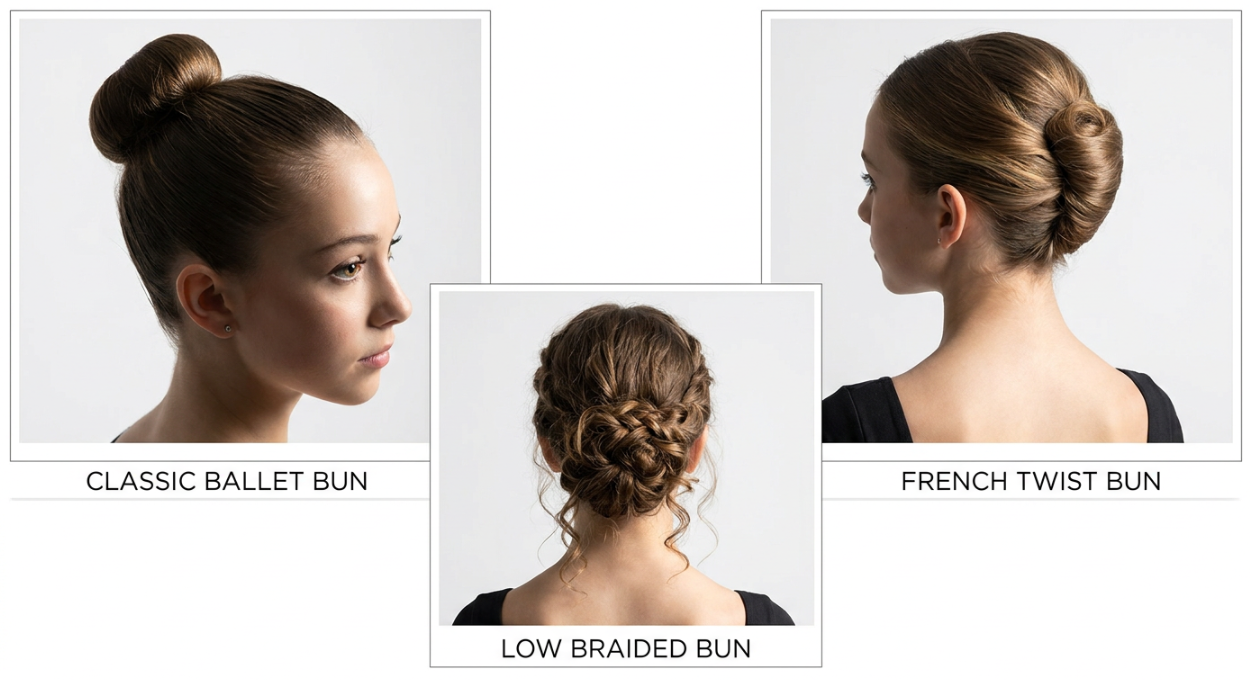
Classic Ballet Bun
The classic ballet bun is the gold standard for ballet competitions worldwide. It features a sleek, tight coil of hair positioned at the crown of the head, creating a smooth silhouette that emphasizes the neck and shoulders — the visual frame of a ballet dancer’s posture. The look is deliberately minimalist, drawing all attention to the dancer’s lines and facial expressions without distraction.
Best For: Ages 8 and up, formal ballet competitions, classical variations
Hair Type: Works best for medium to long hair (8"+); fine hair may need double-bun or hair padding for fullness
Step-by-Step Styling:
1. Brush hair thoroughly to remove all tangles
2. Apply hairspray to damp hair for grip
3. Gather hair into a high ponytail at the crown
4. Twist the ponytail tightly and wrap it around the base
5. Secure with two bobby pins in an X pattern
6. Smooth flyaways with light gel or spray
Pro Tip: Use a hairnet over the bun for extra security during turns and jumps.
French Twist Bun
The French twist bun offers a sophisticated variation on the classic ballet look. Hair is rolled upward from the nape of the neck and pinned horizontally, creating an elegant, elongated silhouette. This style is particularly flattering for dancers with shorter necks, as it visually lengthens the profile. It reads as polished and refined while still maintaining the clean aesthetic judges expect in ballet.
Best For: Teen and adult dancers, solo competitions, judges’ showcase pieces
Hair Type: Medium to long hair; shorter hair may need a hair bundle or wig
Step-by-Step Styling:
1. Pull hair into a low ponytail at the nape
2. Twist the ponytail upward along the spine of the hair
3. Roll the twist under toward the crown
4. Pin vertically with 4-5 bobby pins through the center
5. Cross two more pins horizontally for reinforcement
6. Set with freeze-control hairspray
Low Braided Bun
A contemporary take on the traditional ballet bun, this style incorporates a loose braid wrapped around the base of the bun. The braid adds subtle visual interest without compromising the clean lines of ballet. It works especially well for contemporary ballet pieces where a slightly softer aesthetic is appropriate while still honoring classical tradition.
Best For: Contemporary ballet, lyrical ballet, competition solos
Hair Type: Long hair required; braids add volume for fine hair
Step-by-Step Styling:
1. Create a loose three-strand braid from the ponytail
2. Wrap the braid around the base of the bun
3. Tuck the end underneath and pin securely
4. Soften with a light pomade for a lived-in finish
Best Hip Hop Dance Competition Hairstyles in 2026
Hip hop dance demands edge, attitude, and individuality. Competition hairstyles in this category should reflect the bold, expressive nature of the genre — think texture, volume, color, and creative edge.
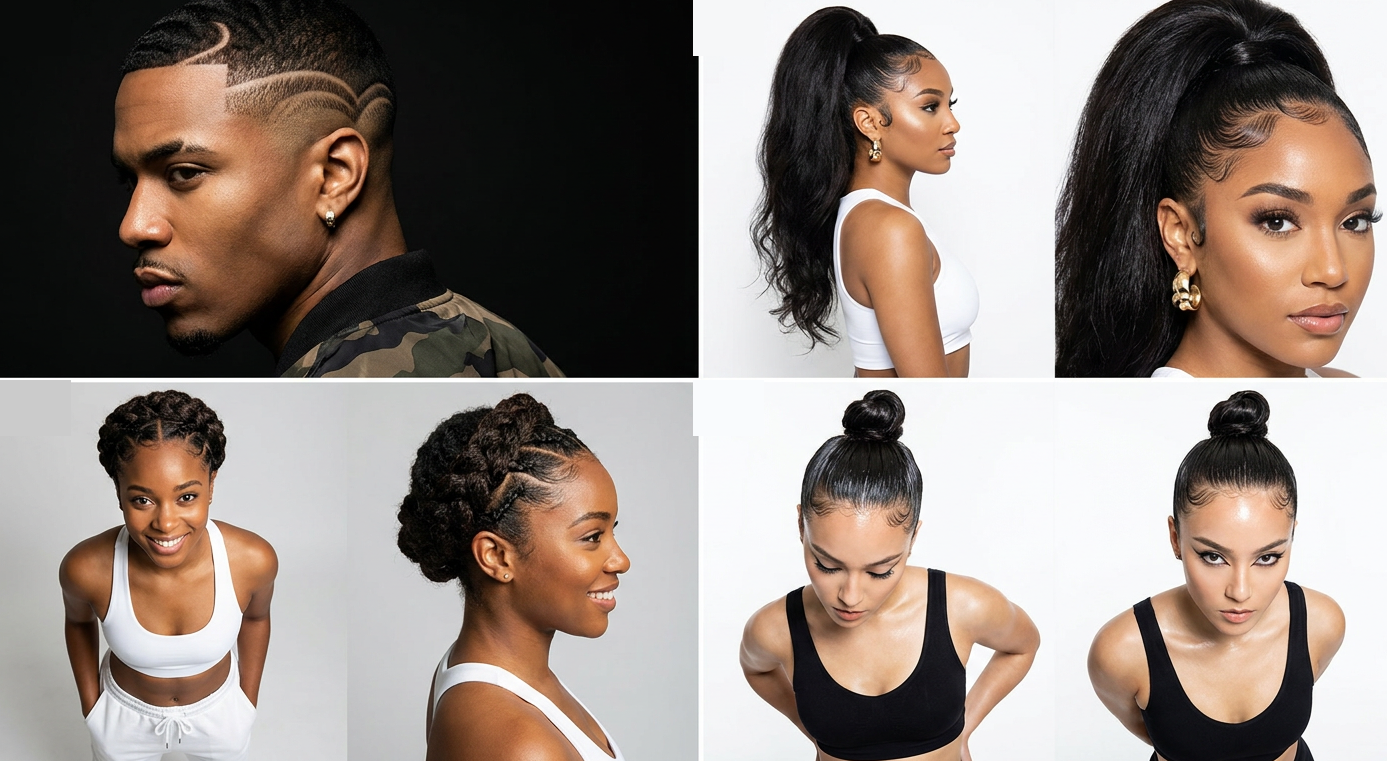
Sculpted Fade with Design
For male hip hop competitors or female dancers with very short hair, the sculpted fade with a hair design (hairline art) is the ultimate showstopper. Sharp fade lines at the sides and back are combined with a geometric or curved design shaved into the hair near the temple or crown. This look commands attention the moment you step on stage and communicates confidence and commitment to the craft.
Best For: Male hip hop dancers, gender-neutral routines, crew competitions
Hair Type: Short hair (Grade 1-4 fade)
Pro Tip: Pair with eye-catching costume elements — the clean lines of the fade complement sharp, athletic silhouettes.
Full Volume High Ponytail with Baby Hairs
This iconic hip hop hairstyle features a super-high ponytail with maximum volume at the crown, achieved through backcombing and strategic pinning. Baby hairs (fine hair along the hairline) are swooped and smoothed into deliberate, sculpted curves. The look is polished, intentional, and unmistakably hip hop. It’s especially powerful for female hip hop competitors.
Best For: Female hip hop dancers, crew performances, solo showcase pieces
Hair Type: All hair types; extensions add volume for fine hair
Step-by-Step Styling:
1. Backcomb the crown area heavily for maximum height
2. Smooth the surface with a paddle brush
3. Gather into a high ponytail — the higher, the better
4. Wrap a small section around the elastic to hide it
5. Use edge gel and a small brush to sculpt baby hairs
6. Set with spray and pin any loose pieces
Braided Crown with Defined Parts
Cornrow braids are the foundation of many hip hop competition hairstyles, particularly for dancers with natural curly or textured hair. A braided crown involves rows braided tightly back from the hairline, meeting at the crown where they can be pinned into a sleek bun or left loose. Defined parts — crisp lines between braids — add structure and visual interest.
Best For: Natural hair, textured hair, youth hip hop competitions
Hair Type: Curly, coily, natural hair types
Step-by-Step:
1. Start with freshly braided cornrows from the hairline
2. Create a defined part line down the center or side
3. Bring braids up to the crown
4. Pin into a neat bun or leave in a high stacked braid shape
5. Smooth edges with edge control gel
6. Add decorative beads or clips if appropriate to the routine
Sleek Wet-Look Bun
The wet-look bun creates a glossy, gel-slicked surface that reads as bold and modern — perfect for contemporary hip hop pieces or avant-garde routines. Hair is pulled back tightly and formed into a smooth bun, with all flyaways eliminated using strong-hold gel. The shine factor amplifies under stage lighting, giving the dancer an almost sculptural presence on stage.
Best For: Contemporary hip hop, jazz-funk fusion, solo competitions
Hair Type: All types; works best on straight or blown-out hair
Step-by-Step:
1. Apply strong-hold gel to damp hair
2. Comb through with a fine-tooth comb for even distribution
3. Pull hair back tightly into a high or mid ponytail
4. Form a smooth bun and secure with pins
5. Use a tiny amount of gel on baby hairs
6. Mist with alcohol-based hairspray for shine
Lyrical & Contemporary Dance Competition Hairstyles 2026
Lyrical and contemporary dance prioritize fluidity, emotion, and connection. Hairstyles in this category should complement the natural movement of the body without distracting from the dancer’s expression.
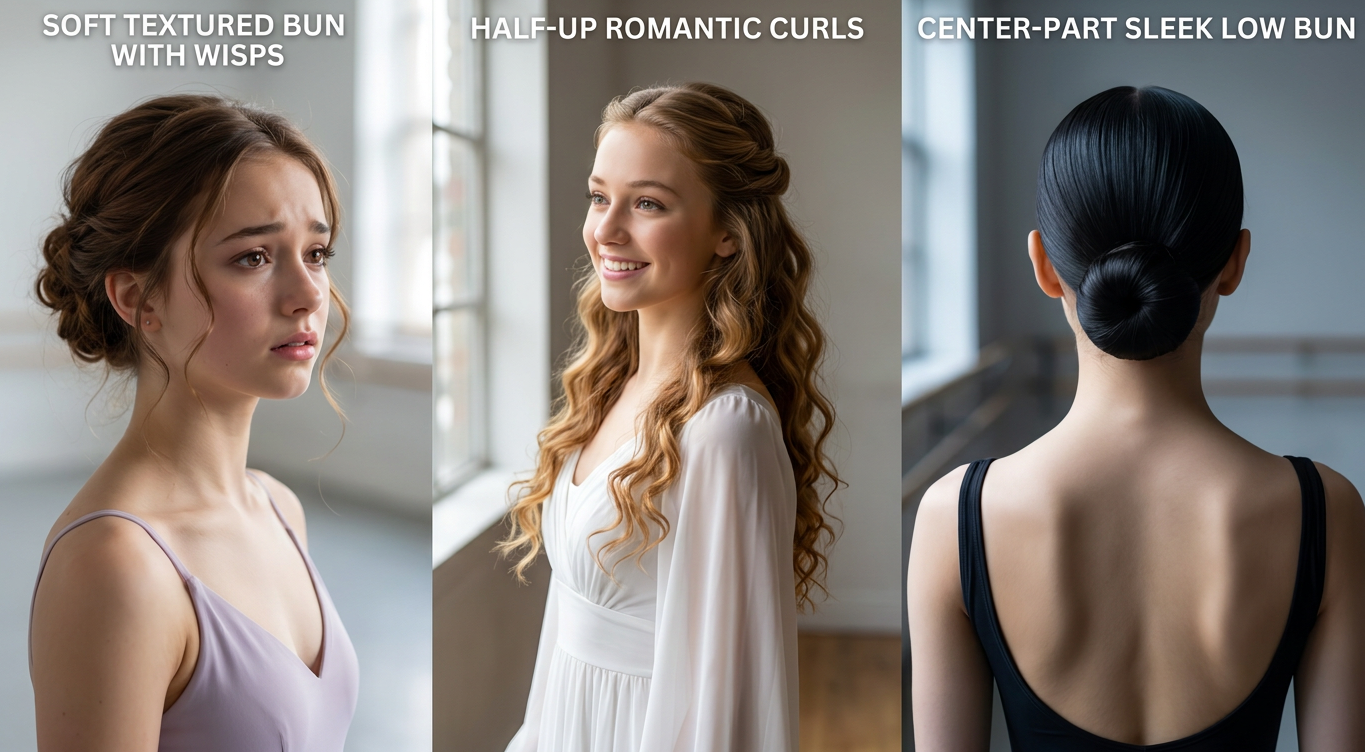
Soft Textured Bun with Wisps
This romantic variation on the competition bun allows for soft, deliberate wisps of hair to fall naturally around the face. The bun itself is neat but not overly tight — slightly textured rather than sleek — which aligns with the organic, expressive quality of lyrical movement. This look reads as effortless and emotionally open, which is exactly what judges want to see in a lyrical piece.
Best For: Lyrical solos, contemporary group pieces, emotional performances
Hair Type: All hair types; works beautifully with naturally wavy or curly hair
Step-by-Step:
1. Curl hair loosely with a large-barrel iron for natural texture
2. Gather into a mid-height ponytail
3. Create a loose bun — not tight or slick
4. Leave 2-3 face-framing pieces on each side
5. Tease the bun slightly for softness
6. Set with a medium-hold hairspray
Half-Up Romantic Curls
For dancers with long, beautiful curls, the half-up romantic style keeps hair down and flowing while securing the front half away from the face. This approach allows the dancer’s natural texture to shine — movement is amplified as curls bounce and flow during lyrical choreography. The secured front section ensures hair stays out of the dancer’s face during floor work and pirouettes.
Best For: Lyrical dance, romantic ballads, natural texture showcase
Hair Type: Curly, wavy, long hair
Step-by-Step:
1. Define curls with a curl cream or mousse
2. Diffuse dry for maximum curl pattern
3. Take a small section from each temple
4. Twist or pin together at the crown
5. Add a decorative pin or small flower
6. Mist with a curl-holding spray
Center-Part Sleek Low Bun
A perfectly symmetrical, center-part sleek low bun conveys quiet strength and emotional depth — essential for contemporary competition pieces. The severe sleekness of the style contrasts beautifully with the fluidity of contemporary movement. This is one of the most universally flattering competition styles and reads clearly from every angle on stage.
Best For: Contemporary solos, group contemporary, emotional performances
Hair Type: All types; flat-iron for sleekest result
Step-by-Step:
1. Flat-iron hair for maximum smoothness
2. Create a precise center part using a tail comb
3. Part hair from forehead to nape
4. Secure into a low ponytail at the nape
5. Smooth into a flat, sleek bun
6. Apply edge control gel to all baby hairs
7. Set with anti-humidity hairspray
Cute & Easy Dance Hairstyles for Kids
For younger competitors, simplicity is key. Styles should be quick to execute, comfortable for children to wear, and secure enough to survive an energetic performance.
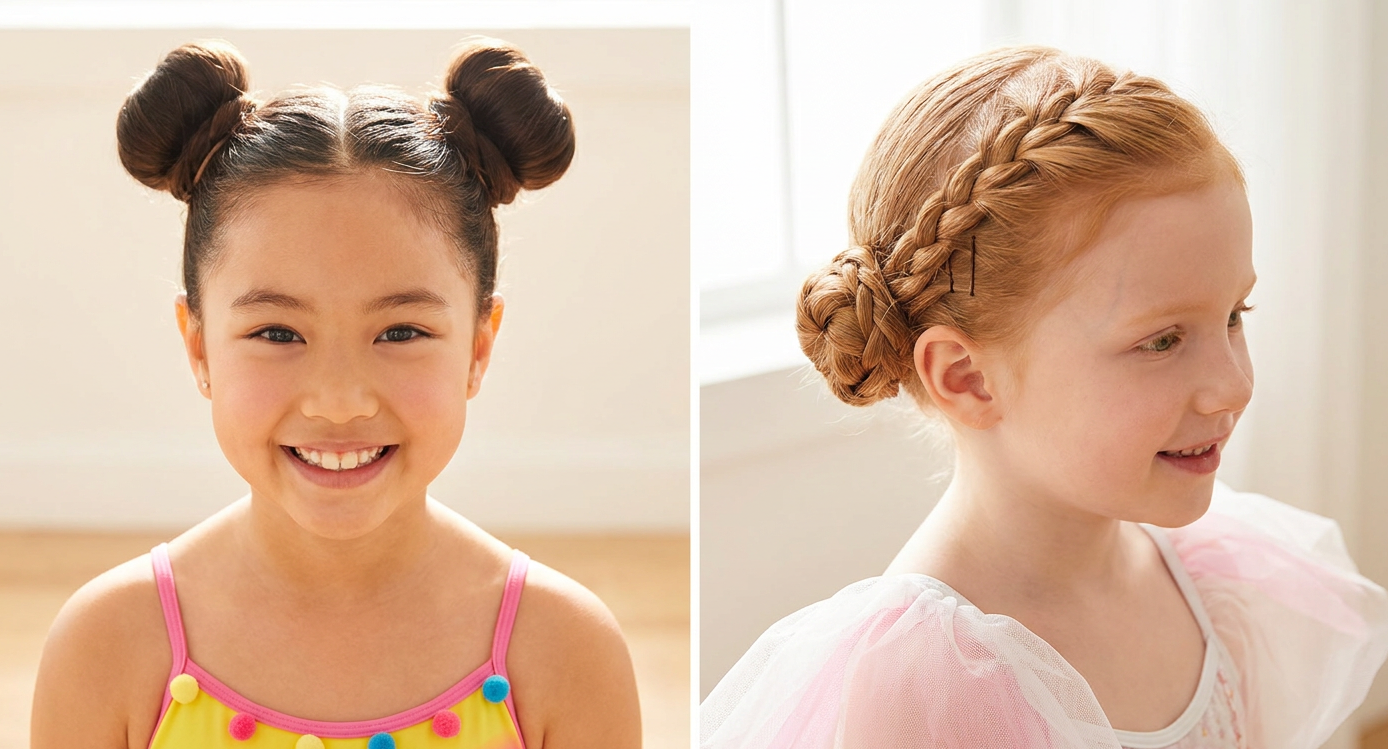
Double Bun (Space Buns)
Space buns — twin buns positioned on either side of the head — are a perennial favorite for young dance competitors. They are cheerful, age-appropriate, and incredibly cute on stage. The double bun works especially well for upbeat routines, jazz, and hip hop pieces for young dancers. They are also extremely quick to execute, which is a blessing when managing a group of young performers.
Best For: Ages 5-12, group performances, high-energy routines
Hair Type: All hair types; extensions add volume
Step-by-Step:
1. Part hair cleanly down the center
2. Create two equal ponytails on each side
3. Twist each ponytail into a tight bun
4. Secure with two bobby pins per bun
5. Add colorful scrunchies or bows for visual impact
6. Spray with medium-hold hairspray
Single Pigtail Braided Bun
This charming style involves braiding the hair to one side and forming the braid into a bun at the crown or temple. It appears youthful, sweet, and elegant—perfect for kid dancers performing ballet, lyrical dance, or modern dance. The braid adds visual interest while keeping hair fully contained.
Best For: Ages 6-12, ballet, lyrical, solo, and group pieces
Hair Type: Medium to long hair
Step-by-Step:
1. Create a side ponytail at the temple
2. Braid the ponytail tightly to the end
3. Wrap the braid around itself to form a bun
4. Secure with bobby pins
5. Smooth edges with a little hairspray
How to Keep Hair in Place While Dancing
The real challenge isn’t creating the look — it’s keeping it intact from morning warm-up through final awards. Hours of movement, stage lights, sweat, and quick changes will test any hairstyle. Here’s how to make it last.
1. Start with the Right Foundation
Clean, dry hair is non-negotiable. Product buildup and oil weigh hair down and make pins slip. Wash the day before or morning of — but don’t load up on heavy conditioners near the scalp. If your hair is on the finer side, a volumizing shampoo at the roots gives you something to build on. Curly or textured hair? Use a curl-specific formula, so you’re working with your pattern, not against it.
2. Prep for Hold, Not Just Looks
Before you start pinning or braiding, apply a lightweight primer or mousse evenly from root to mid-length. This creates grip — the difference between a bun that stays tight and one that loosens by the second routine. For sleek styles (ballet buns, jazz ponytails), an edge control gel smooths flyaways without looking wet. For textured styles (braids, loose waves), a texturizing foam adds body that holds its shape through movement.
3. Use the Right Tools
A quality blow dryer with a cool-shot button isn’t a luxury — it’s what locks your style in place. Heat forms the shape; cool air seals the cuticle and sets it. Always make sure hair is fully dry before braiding, pinning, or using hot tools. Damp hair = collapsed hair, no exceptions. Ceramic or tourmaline tools distribute heat evenly and reduce frizz under harsh stage lighting.
4. Don’t Rush the Build
The fastest way to lose a hairstyle is to rush it. Section cleanly. Braid tightly but not painfully. Pin criss-cross, never parallel. Secure elastic bands with a second wrap or a bobby pin anchor. Styles built with intention survive warm-ups; thrown-together ones don’t make it past the first number.
5. Product Kit — What You Actually Need
| Product | Why It Matters | Best For |
|---|
| Strong-hold hairspray | Final lockdown layer | All styles |
| Mousse / Primer | Grip base before styling | Fine or slippery hair |
| Edge control | Smooths hairline & baby hairs | Sleek buns, ponys |
| Anti-humidity spray | Blocks frizz from heat + sweat | Stage performances |
| Dry shampoo | Refreshes roots between numbers | Long competition days |
| Bobby pins (50+, matching color) | Structural security | Everything |
| Hairnets | Keeps buns compact during spins | Ballet, lyrical |
| Elastic bands (no metal) | Secure base, no snagging | Ponytails, pigtails |
| Setting spray (light hold) | Finishing touch, no crunch | All styles |
6. Lock It, Then Be Realistic
Finish with a light, even mist of setting spray or hairspray — one pass is enough. You want security, not a helmet. Pack a small emergency kit: extra pins, a travel-size hairspray, and edge control for touch-ups between numbers. And accept the reality: humidity, sweat, and back-to-back routines are uncontrollable. A mid-day adjustment isn’t failure — it’s just part of competition day.
What to Do for Your Race Day Hairstyles
1. Wash hair the night before— Day-old hair has more grip
2. Apply product to damp hair before styling for maximum hold
3. Double-pin every bun— two pins in an X pattern
4. Pack a competition hair kit: hairspray, bobby pins, edge gel, mirror, comb
5. Do a full run-through test— dance your piece with the hairstyle before competition day
6. Refresh between rounds— spray, smooth edges, re-pin any loose pieces
7. Keep emergency supplies— extra hair ties, a small bottle of hairspray, and a few bobby pins in your dance bag
Can I Use Extensions for Dance Competition Hairstyles?
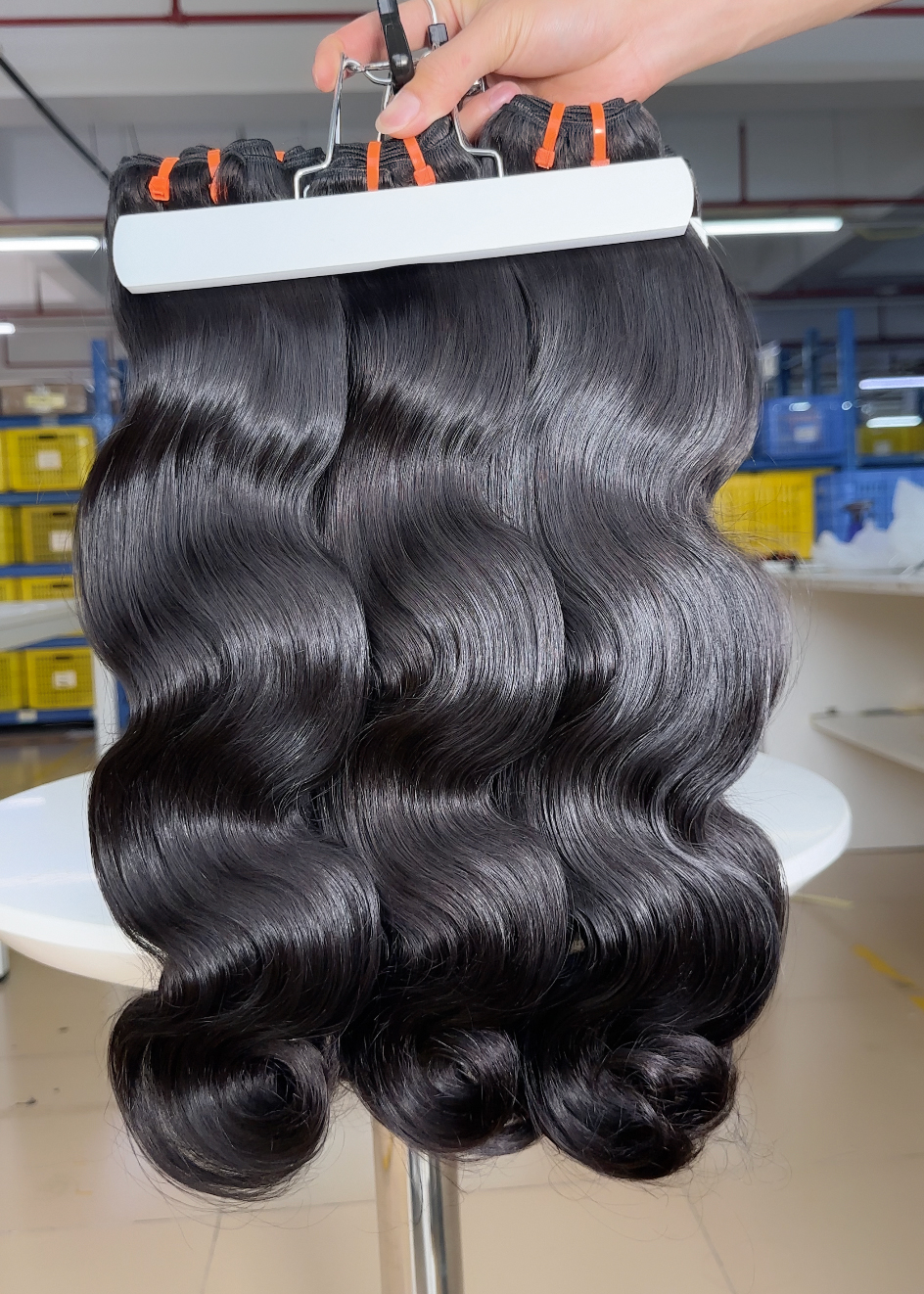
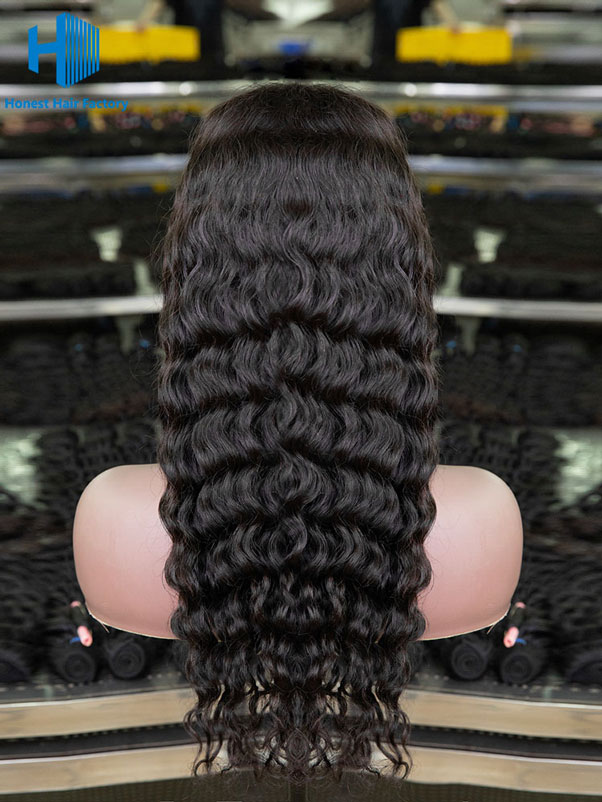
Yes — hair extensions are commonly used in competition recitals. They add length, volume, and body to any style. Body Wave hair bundles are ideal for building fullness into braids or flowing updos — the wave pattern holds beautifully through hours of movement and still blends naturally with straightened sections when needed. For dancers who want a complete style change without the installation time, a 13×4 frontal lace wig gives you a natural hairline and the freedom to switch between looks in minutes. Clip-in extensions also work well for quick ponytails and half-up styles, while invisible halo extensions blend seamlessly into braided looks. Just ensure extensions match your hair texture and are secured with the same double-pin method to prevent shifting mid-performance.
How Do I Keep My Bun from Falling Out During Turns?
Use a hairnet over the bun, pin it in an X pattern with two bobby pins, and apply a hairspray primer before styling. For extremely active pieces, try a bun donut (foam hair donut) to add structure, then cover with your own hair or a hairnet. A final mist of freeze-hold spray seals everything.
What Hairstyles Are Best for Dancers with Curly or Coily Hair?
Braided styles are your best friend — cornrows, box braids, or Senegalese twists keep hair contained, celebrate natural texture, and stay secure through intense choreography. The braided crown bun works for most competition settings. For sleeker looks, a wash-and-go with gel at the edges can be competition-ready with the right products.
How Do I Choose the Right Hairstyle for My Dance Recital?
Match the hairstyle to the character and energy of the piece:
Classical/vintage: Classic ballet bun, French twist, finger waves
Bold/energetic: High ponytail, space buns, slicked-back looks
Emotional/flowing: Textured buns, loose curls, center-part low bun
Street/urban: Sculpted styles, braids, wet-look buns
When in doubt, go simpler — judges are evaluating your dancing, not your hair. A clean, secure style is always better than an elaborate one that shifts during your routine.