

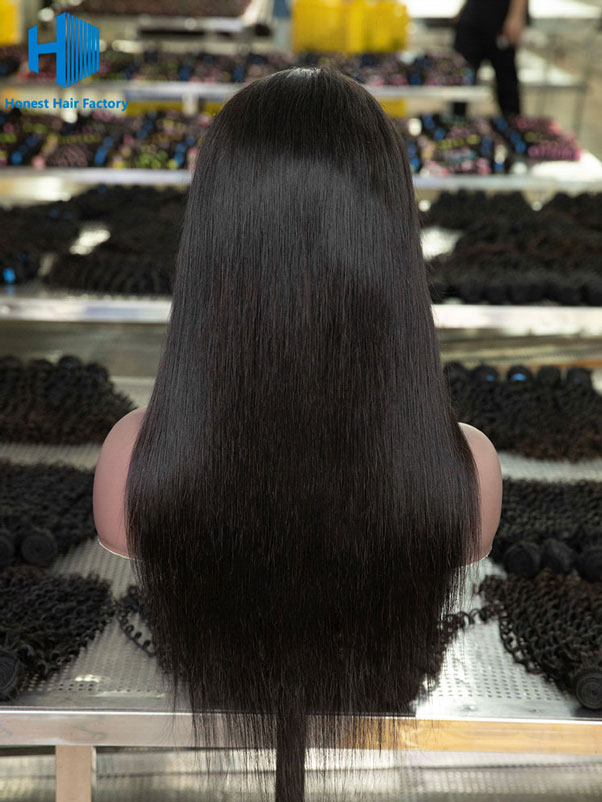
Wholesale Straight Pre-plucked 13*5 Frontal Lace Wig With Raw Hair
How to Straighten Your Wig Easily - Can You Straighten a Wig at Home?
Do you crave a sleek, straight look for your wig at home? Whether you own a luxurious human hair wig or a budget-friendly synthetic one, straightening it at home is totally achievable—with the right techniques and care. Not all wigs react the same way to heat and styling, so it’s crucial to tailor your approach to your wig’s material. In this guide, we’ll break down step-by-step methods for straightening human hair and synthetic wigs, ensuring you get beautiful results while keeping your wig in top condition.
Can You Straighten a Wig at Home?
Yes, but it depends on the type of wig you have.
Human hair wigs are the most versatile when it comes to styling. Made from real human hair, they can be straightened, curled, and styled just like your natural locks—you can use heat tools like flat irons and blow dryers with confidence as long as you follow proper precautions. These wigs thrive with heat styling and retain a polished, natural straight look when done correctly.
Synthetic wigs, however, are a different story. Most standard synthetic wigs are made from plastic-based fibers (like polyester or acrylic) that can’t tolerate high heat. Using a flat iron or blow dryer on high heat will melt, singe, or frizz the fibers permanently—ruining your wig. But don’t despair! There are heat-resistant synthetic wigs on the market that can handle low to moderate heat. Additionally, even non-heat-resistant synthetic wigs can be straightened using gentle, heat-free methods like steam or hot water.
Note: Always check your wig’s care label first. For synthetic wigs, perform a quick strand test if you’re unsure about heat resistance. With the right tools and techniques, you can safely straighten almost any wig at home—no salon required.
How to Straighten Human Hair Wigs?
Human hair wigs offer the most flexibility for heat styling, so you can achieve a super smooth, long-lasting straight look with tools you probably already own. Follow these steps for the best results:
Tools You’ll Need
Flat iron (preferably with adjustable temperature settings)
Blow dryer (with a concentrator nozzle)
Round brush (for blow-dry straightening)
Wide-tooth comb or wig-specific brush
Sectioning clips
Wig stand or styrofoam wig head
T-pins (to secure the wig to the stand)
Heat protectant spray or hair care essential oil
Lightweight styling serum or silicone spray (optional, for extra shine)
Heat-resistant glove (to protect your hands)
Steps for Straightening Human Hair Wigs
1. Prep the Wig
Start by ensuring your wig is clean and dry—never straighten wet or damp human hair wigs, as the hair fibers are fragile when wet and prone to breakage. If your wig is dirty, wash it with a gentle, wig-friendly shampoo and conditioner, then air-dry it completely on a wig stand.
Once dry, secure the wig to the wig stand using T-pins (focus on the ear tabs and nape to keep it stable). Use a wide-tooth comb to detangle the hair gently, starting from the ends and working your way up to the roots. This prevents knots from getting worse and avoids pulling or shedding.
2. Protect Against Heat
Heat protectant is non-negotiable for human hair wigs—high temperatures can dry out the fibers and cause split ends. Spray a lightweight heat protectant evenly throughout the hair, from roots to ends, or rub a small amount of hair care essential oil (like argan oil) between your palms and smooth it over the strands. This creates a protective barrier that locks in moisture and shields the hair from heat damage.
3. Choose Your Styling Method
You have two effective options for straightening human hair wigs: using a flat iron (for a super sleek finish) or blow-drying (for added volume).
Method A: Flat Iron Straightening
Section the hair: Use sectioning clips to divide the wig into small, manageable sections (about 1 inch wide). Start with the bottom layers and clip the rest of the hair up and out of the way—this ensures you don’t miss any strands and get an even straighten.
Set the temperature: Adjust your flat iron to 230–250°F (110–121°C). Avoid temperatures above 300°F (149°C), as this can damage the hair fibers over time. Remember: It’s better to start with a lower temperature and increase slightly if needed.
Straighten each section: Put on your heat-resistant glove. Take one small section of hair, hold it taut at the ends, and glide the flat iron from the roots to the ends in one smooth, steady motion. Don’t linger on any single spot—this can cause heat damage or create creases. For a polished look, follow the flat iron with a comb to “catch” the section and ensure it stays straight.
Repeat: Work your way up from the bottom layers to the top, unclipping sections as you go. If any strands are still slightly wavy, run the flat iron over them again (but don’t overdo it—too many passes can dry out the hair).
Method B: Blow-Dry Straightening
Prep for volume: If you want straight hair with a bit of body, this method is perfect. After detangling and applying heat protectant, section the hair into 1–2 inch sections.
Blow-dry with a round brush: Attach the concentrator nozzle to your blow dryer (this directs the heat evenly). Take one section of hair, wrap it around the round brush, and hold the blow dryer close to the brush as you pull it down from roots to ends. Keep the brush moving steadily to avoid heat damage, and curve the ends slightly inward for a sleek finish.
Finish with cool air: Once all sections are dry, switch your blow dryer to the cool air setting and run it over the hair. This helps set the style and adds shine.
4. Final Touches
After straightening, let the wig cool completely on the stand. Once cool, use a wide-tooth comb to gently brush through the hair and smooth out any flyaways. For extra hold and shine, spritz a small amount of lightweight styling spray or silicone serum over the strands—avoid overusing products, as this can make the wig look greasy.
How to Straighten Synthetic Wigs Without Heat?
Before using any heat tools, perform a strand test. Take a small, inconspicuous strand of hair (from the nape or inside the wig cap) and hold a flat iron set to 250°F (121°C) over it for 2–3 seconds. If the strand melts, frizzes, or changes color, your wig is not heat-resistant—stick to heat-free methods. If it stays intact, you can use low heat (never exceed 300°F/149°C).
Tools You’ll Need
Handheld steamer (for heat-free straightening)
Large pot (for hot water method)
Thermometer (to check water temperature)
Wig stand or styrofoam wig head
T-pins
Wide-tooth comb
Sectioning clips
Wig conditioner or silicone spray
Heat-Free Straightening Steps (For All Synthetic Wigs)
If your wig isn’t heat-resistant, use one of these gentle methods to straighten without damaging the fibers.
Method 1: Steam Straightening
Prep the wig: Secure the wig to the stand and detangle with a wide-tooth comb. Section the hair into 1–2 inch sections using clips.
Steam the strands: Hold a handheld steamer 3–4 inches away from the hair (don’t touch the fibers directly). Move the steamer slowly down each section, allowing the steam to soften the fibers. As you steam, use a wide-tooth comb to guide the hair straight and smooth out any waves.
Set the style: Let the wig air-dry completely on the stand—don’t touch or brush it while it’s damp. Once dry, the hair will retain its straight shape.
Method 2: Hot Water Straightening
Prepare the water: Heat a large pot of water to 160–180°F (71–82°C) using a thermometer. If the water is too hot, it will melt the fibers; if it’s too cool, it won’t straighten effectively.
Prep the wig: Secure the wig to the wig stand and detangle gently (make sure the wig is completely dry before starting—brushing wet synthetic hair causes frizz).
Pour the water: Slowly pour the hot water over the wig, ensuring all strands are evenly saturated. The hot water will soften the fibers and help mold them into a straight shape.
Smooth and dry: Use your fingers to gently comb the hair straight (avoid using a brush, as this can damage wet synthetic fibers). Let the wig air-dry completely on the stand. For better results, repeat the process once if the hair is still wavy.
Condition: After drying, apply a small amount of wig conditioner or silicone spray to the strands, then comb gently to reduce static and add shine.
Tips for Maintaining Straight Wigs
Avoid over-washing: Wigs don’t need frequent washing—wash human hair wigs every 2–3 weeks and synthetic wigs every 4–6 weeks. Over-washing can strip the fibers of moisture and cause frizz.
Store properly: When not in use, keep your straight wig on a wig stand to maintain its shape. Avoid folding or crushing it, as this can create permanent creases.
Protect from humidity: Humidity can make synthetic wigs frizzy and human hair wigs lose their straightness. Use an anti-humidity spray to keep the style intact.
Don’t use regular hair products: Stick to wig-specific shampoos, conditioners, and styling products—regular hair products can be too harsh and damage the fibers.
You are one step away to access to our wholesale prices