

Types of Perms for Hair - Cold Perm vs Digital Perm vs Ceramic Perm, What is the Difference
The hair perming method can be divided into two basic categories: cold perm and hot perm. And there are multiple perming techniques of hot perm. Cold perm vs digital perm vs ceramic perm, what’s the difference between them?
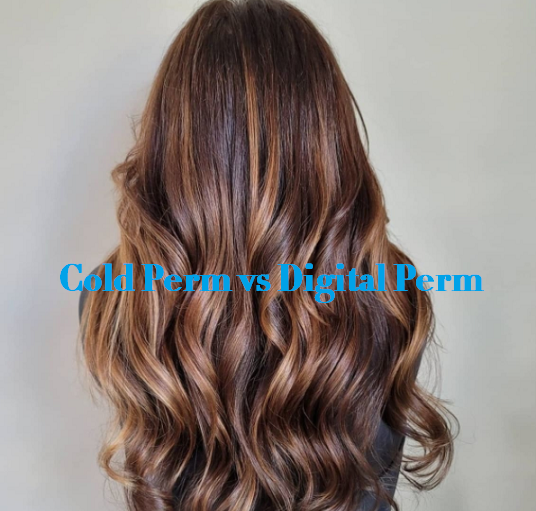
What Is Hair Perm?
A hair perm (short for “permanent hairstyle” or “permanent wave”) is a chemical styling treatment designed to alter hair’s natural texture, converting straight hair into curls, waves, or ringlets, or occasionally straightening curly hair by restructuring its molecular structure. The process typically takes several hours at a salon and involves two key chemical stages: first, a solution (alkaline for cold perms, milder for hot perms) breaks down the keratin bonds in hair strands, which are responsible for maintaining its natural shape. Next, the hair is wrapped tightly or loosely around rods/rollers of varying sizes (depending on the desired curl type, from tight spirals to soft beach waves) to mold it into the new shape. After allowing the chemical to process for 15–20 minutes (or longer for hot perms), a neutralizing solution is applied to re-form the broken bonds, “setting” the new texture permanently.
Do Perms Damage Your Hair?
Yes, perms can damage hair, as they rely on potent chemicals to break and reform hair’s internal bonds, which disrupts the hair’s natural structure. The American Academy of Dermatology (AAD) notes that perming is a chemical service, similar to coloring or relaxing, and repeated or improper use can lead to dryness, frizz, brittleness, and breakage, especially for hair that’s already bleached, dyed, or overprocessed. Hot perms add heat exposure, which can exacerbate damage to fragile hair. However, modern perm techniques have evolved to minimize harm: milder chemical formulas, precise processing times tailored to hair type, and post-perm conditioning treatments help nourish strands. To reduce damage, the AAD advises avoiding combining perming with other chemical services (e.g., coloring) at the same time, choosing an experienced stylist, and maintaining permed hair with moisturizing shampoos, deep conditioners, and heat protectants. Hair that is overly damaged or weak should avoid perming altogether, as it may not withstand the chemical stress.
How Long Do Perms Last in Your Hair?
On average, perms last 3 to 6 months, but this lifespan can extend to 6–8 months for those with long hair, since the curly ends remain intact as new, unpermed hair grows from the roots, preserving texture longer. Short hair perms typically last 3–4 months, especially with regular trims. Several factors influence longevity: hair health (virgin, unprocessed hair holds curls better than chemically treated or dry hair), post-perm care (avoiding frequent washing, water exposure from swimming or wet weather, and heat styling), stylist expertise (proper bond-breaking and neutralization), and product quality (using moisturizing, toxin-free haircare). Additionally, scalp health and hair growth rate play roles—faster growth means new straight hair will appear sooner, reducing the perm’s visible duration.
Cold Perm vs. Digital Perm vs. Ceramic Perm: Differences & How to Choose
The main perming method is cold and hot (digital) perm. When it comes to achieving long-lasting curls or waves, there is another popular perm technique that stands out: ceramic perm. Each method uses distinct tools, temperatures, and chemical approaches to reshape hair, resulting in unique curl patterns, longevity, and suitability for different hair types. Below is a detailed breakdown of their differences and guidance to help you pick the right one.
1. Cold Perm (Cold Wave Perm)
The cold perm is the most traditional perm method, relying solely on chemical solutions without heat to restructure hair. Stylists apply an alkaline solution (often ammonium thioglycolate) to break down hair’s disulfide bonds, then wrap the entire hair shaft tightly around perm rods of various sizes. A neutralizing solution is later used to reform the bonds, locking in tight, defined curls.
Key results: Curls are most vivid and elastic when hair is wet; as it dries, curls loosen slightly, become less elastic, and may develop mild frizz—requiring moisturizing styling products (like foam or gel) to maintain the “wet look.” This method excels at creating small to medium tight spirals or voluminous ringlets, making it ideal for short hair or anyone craving bold, structured curls.
Best for: Healthy, coarse hair (that hasn’t been heavily bleached or colored) and fine/straight hair needing extra volume. It’s also a top choice for those on a budget or wanting low-effort daily maintenance (air-drying with minimal product works well).
2. Digital Perm (Digi-Perm / Hot Perm)
A modern, gentler alternative, the digital perm combines mild chemical solutions with digitally controlled heated rods (plastic, heat-resistant curlers). The rods’ temperature is precisely adjusted (typically 40–160°C, averaging 130°C) to reshape hair without harsh chemicals. The process involves softening hair cuticles with an acidic solution, wrapping strands around heated rods, and using a neutralizer to set the new shape—focusing on mid-lengths to ends for a natural flow.
Key results: Soft, loose waves or bouncy curls that look effortless (similar to curling iron results) and stay defined when dry. Unlike cold perms, digital perms produce smoother, frizz-free texture with looser ends. They’re low-maintenance for daily styling, as waves hold well with minimal heat or product.
Best for: Thick, coarse hair (including Asian hair, which responds well to controlled heat), longer hair (shoulder-length or more), and those with slightly damaged/color-treated hair (thanks to gentler chemicals). It’s perfect if you want natural-looking waves that don’t feel “overdone.”
3. Ceramic Perm (Far-Infrared Ceramic Perm)
The ceramic perm uses high-heat ceramic rods (heated to around 180°C, the hottest among the three) and chemical solutions to create tight, long-lasting S-curls. Stylists wrap hair around ceramic barrels (often part of an “octopus-style” tool) that conduct far-infrared heat, penetrating hair deeply to set curls firmly. The process is similar to digital perms but with higher temperatures and sturdier ceramic tools.
Key results: Highly defined, voluminous curls that retain their shape when dry (even more so than cold perms) and add significant body to hair. Ceramic perms tend to “shorten” hair more noticeably due to tight curl definition, and the ends remain curly rather than loosening. They’re known for a sleek, shiny finish but require careful aftercare to avoid heat damage.
Best for: Thick, coarse, resilient hair (bra-length or longer, with minimal layering) that can withstand high heat. It’s not ideal for fine, thin, or damaged hair, nor short hair (which is hard to style with ceramic rods).
| Factor | Cold Perm | Digital Perm | Ceramic Perm |
|---|---|---|---|
| Longevity | 2–4 months (shorter due to chemical-only hold) | 3–6+ months (longer with heat-set bonds) | 3–10 months (longest, thanks to high heat penetration) |
| Hair Damage | Moderate (harsher chemicals, no heat) | Mild (gentler formulas + controlled heat) | High (highest temperature + chemicals; risks dryness/breakage) |
| Process Time | 1.5–2.5 hours (faster, no heat waiting) | 3–4 hours (precise heat control) | 3–4 hours (slow heat conduction + thorough bonding) |
| Cost | Most affordable (varies by salon, ~$60–$160) | Mid-range (~$100–$300) | Most expensive (specialized tools/tech, ~$265–$380) |
| Aftercare Needs | Use moisturizing products; avoid frequent washing | Hydrate with gentle shampoos/serums; limit heat styling | Avoid blow-drying (use cold setting if needed); deep condition regularly; no heat for 48 hours post-perm |
How to Choose the Best Perm Solutions for You?
Choose Cold Perm if: You want tight, voluminous curls, have short/coarse/fine hair, prefer a budget-friendly option, or don’t mind mild frizz with wet styling.
Choose Digital Perm if: You crave natural, low-maintenance waves, have longer/thicker hair (including Asian hair), want gentler treatment for slightly damaged/colored hair, or dislike overly defined curls.
Choose Ceramic Perm if: You desire long-lasting, sleek S-curls with maximum volume, have thick/coarse bra-length hair (minimal layers), and are willing to invest in higher cost and intensive aftercare to manage heat damage.
Types of Perms of Hair - Hair Perming Solutions
1. Root Perm
Focused solely on the hair’s base, a root perm delivers targeted volume for straight or thin locks that lack oomph. The process involves securing small rollers at the roots, saturating them with a perm solution to break and reset hair structure, then sealing in the lift with a shaping agent. Short to medium hair reaps the most benefits (longer strands can overpower the root lift), and results last 2–6 months. By limiting treatment to the roots, it minimizes stress on the rest of the hair shaft—ideal for anyone cautious about damage.
2. Volumizing Perm
For straight or thin hair that needs a boost, a volumizing perm uses loose waves (not tight curls) to amplify fullness. Unlike typical perms, the rods are taken out prior to neutralization, which softens the curl pattern and emphasizes volume over definition. The result? Root lift paired with subtle end waves that add body without drama. It’s a temporary fix—around 6 weeks—perfect for anyone wanting a quick volume pick-me-up without committing to durable curls.
3. Body Wave Perm
A body wave perm stands out as a top alternative to root perms for medium to long straight or thin hair, offering loose, organic waves and enhanced volume. Stylists wrap strands around large or medium rollers, apply perm solution to restructure hair bonds, and lock in a relaxed curl pattern that feels effortless. Since the waves aren’t tight, the perm maintains its shape for 6–12 weeks, making it a low-maintenance choice for anyone seeking texture without over-the-top curls.
4. Beach Wave Perm
Capture the carefree texture of beach waves with a perm that swaps traditional rods for foam rollers and milder solutions. Designed for medium to long straight or wavy hair, it creates loose, tousled waves that feel natural and unforced. By restructuring hair bonds gently, it delivers long-lasting results—about 6 months—so you can enjoy low-effort, sun-kissed waves without daily styling. It’s perfect for anyone wanting a relaxed, effortless look.
5. Multi-Textured Perm
A multi-textured perm avoids uniform curls by using rods of varying sizes during the process, resulting in a mix of tight spirals and loose waves. This technique adds depth and dimension to medium to long straight or wavy hair, mimicking the randomness of natural curls. It lasts 3–6 months with proper care, making it a great choice for anyone wanting volume and texture without the rigidity of matching curls. It’s all about creating a lived-in, effortless look.
6. Stack Perm
For one-length straight or wavy hair (short to long) craving dimension, a stack perm creates the illusion of layered curls. Stylists wrap varying roller sizes around mid-lengths and ends (keeping roots relatively straight), use perm solution to restructure hair, and finish with neutralizer to lock in the layered effect. It boosts volume and structure, mimicking the look of cut layers without the commitment. Lasting 4–6 months, it’s a low-maintenance way to add depth to flat, one-note hair.
7. Straight Perm (Reverse Perm)
A straight perm (reverse perm) permanently straightens curly or wavy hair by altering its molecular structure. The process starts with a thorough wash, followed by a chemical solution that breaks sulfur bonds (the ones that give hair its curl). Stylists then use heat to straighten strands and apply a neutralizer to set the new straight shape. Suitable for short to long curly/wavy hair, it lasts about 3 months but carries a risk of damage due to strong chemicals and heat. It’s ideal for anyone wanting long-term straight hair without the daily hassle of styling.
8. Partial Perm (Spot Perm)
A partial perm (spot perm) focuses on specific sections of hair, not the entire head, to add curls or volume. It’s perfect for thin hair needing root lift, curly hair with uneven texture, or anyone wanting subtle enhancements without full-head perming. The steps mirror standard perms—rod wrapping, chemical solution, neutralization—but are limited to chosen areas. Suitable for short to long hair, it lasts 3–4 months and offers flexibility to address unique hair concerns.
9. Spiral Perm
A spiral perm stands out for its tight, bouncy ringlets, created by wrapping medium to long hair vertically around perm rods (rod size dictates curl tightness). Unlike regular perms with uniform curls, spiral perms offer twisted, varied spirals that maximize volume. It works best on curly or thin hair (which holds the curl pattern well) and lasts around 6 months with proper maintenance. The vertical wrapping technique is what makes its shape unique—perfect for anyone wanting a dramatic, eye-catching look.
Before perm, the diagnosis of hair quality is very important. Understanding hair quality and purposeful selection of the perm method and perm water can effectively avoid damage to hair quality and better reflect hair curl. It is possible to perm a synthetic deep wave wig with correct operations, but the results may not be as effective as they would be with human hair wigs, and wigs made from synthetic fibers need more care.