

Every great cheer performance starts long before the squad hits the floor — it starts with the hair. Whether you’re a flyering flier, a steady base, or the composed squad captain holding the whole routine together, your hairstyle acts as a core piece of the team uniform, squad brand identity, and the vibrant energy you carry to school basketball shows, college football match days, competitive cheerleading championships, and all-school spirit rally events. This blog covers 10 must-try simple cheerleader hairstyles for girls and kids in 2026 (cheer comp, sports, basketball, school), so your entire squad can walk, tumble, and stunt confidently into every sports game, formal cheer competition, and campus entertainment event looking polished, unified, and like champions.
Top 10 Popular & Easy Cheerleader Hairstyles for Girls 2026
Modern cheer teams carefully curate cohesive team hair aesthetics just as meticulously as they craft their stunt choreography and dance routines. These top trending 2026 cheerleader hairstyles are very simple and adaptable for all hair textures, fitting every indoor competitive stage and outdoor public cheer performance occasion.
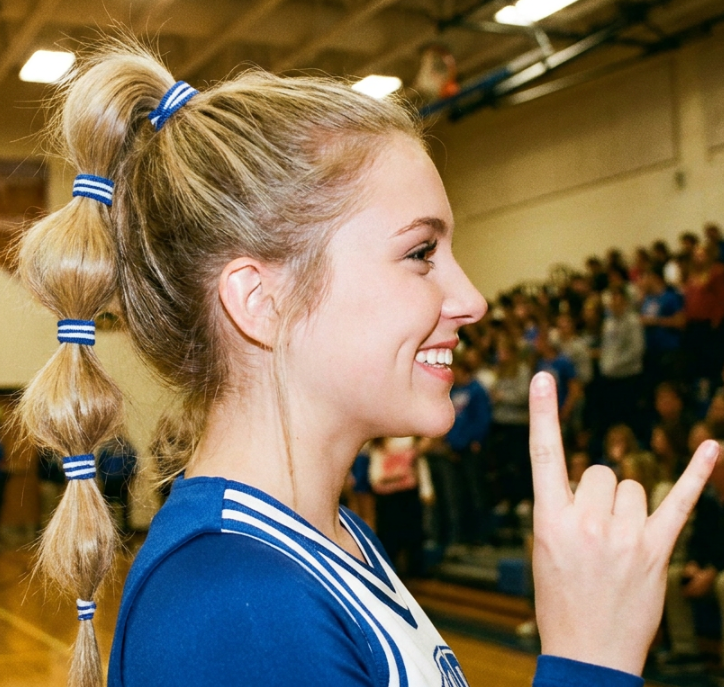
1. The Bubble Ponytail
A playful, modern twist on the classic high ponytail. The 2026 version features multiple evenly spaced hair ties that segment the ponytail into “bubbles” of volume and dimension. This style works with natural textures too — curly or coily hair creates natural, defined bubble segments.
Styling: A high ponytail divided into 3 to 5 sections by clear or colored elastic bands. Each bubble gets a gentle puff from backcombing or texturizing spray.
Best for: Spirit days, pep rallies, and practice sessions.
Pro tip: Use small, snag-free hair ties in your team colors to make the bubbles pop visually.
2. The Sculpted High Ponytail
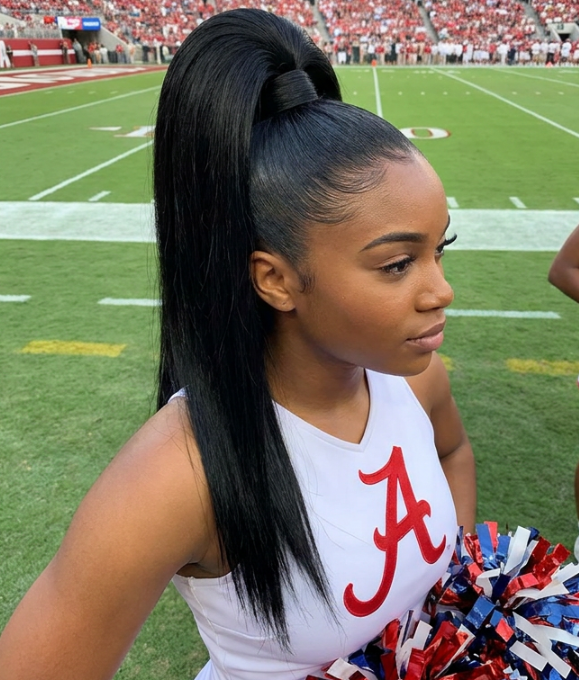
The high ponytail is the iconic cheer style for girls. The sculpted version with a sleek, secure, intentionally shaped design is popular this year. You can also use oversized bows with colors that match your team uniform hues.
Styling: Hair is blown out or heat-styled straight, pulled into an ultra-high ponytail positioned at the crown of the head. The hairline is smoothed with gel or edge control, and the ponytail itself is wrapped with a matching hair tie or hair bungee.
Best for: All positions, especially fliers who need their hair out of the way during partner stunts.
Pro tip: Tease the ponytail at the base before wrapping for extra volume. A little texturizing spray gives the pony body that holds through high-impact routines.
3. The Braided Crown Halo
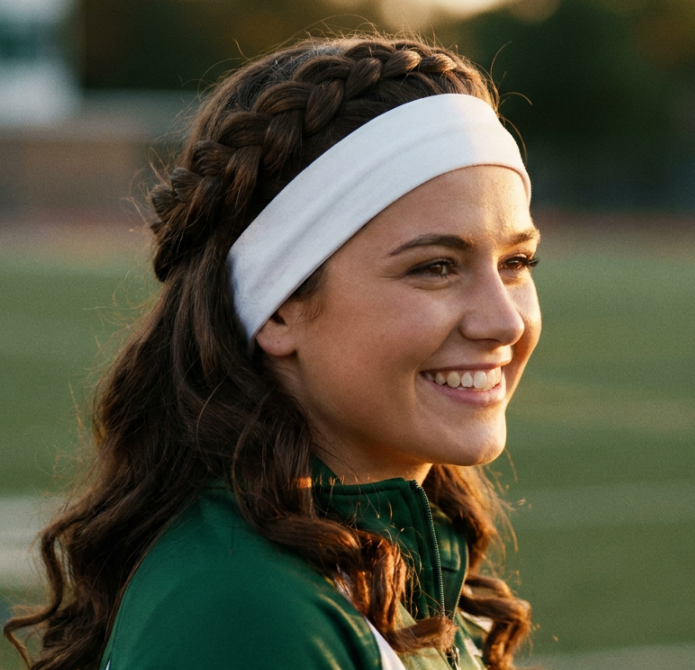
This style frames the face with a braided band across the top of the head, leaving the rest of the hair down or swept back. It’s the 2026 answer to the question every cheerleader asks: “How do I look polished and still have my hair available for the full look?”
Styling: A Dutch braid or fishtail braid starts at one temple, travels across the crown of the head, and ends at the opposite temple. The remaining hair can be worn down, in a low pony, or in a sleek bun.
Best for: Squad photos, half-time performances, and any event where you want elegance without a full updo.
Pro tip: Spray the braid with a light-hold hairspray daily to prevent flyaways throughout a long event day.
4. The Double French Braids
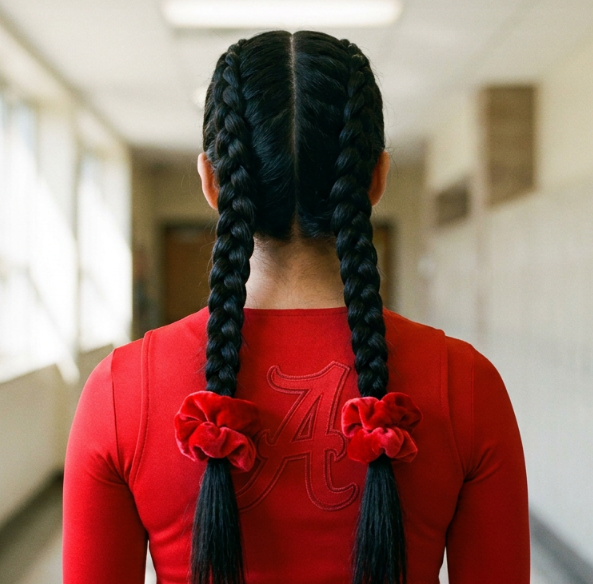
Two symmetrical French braids are a timeless cheerleading look that has evolved into a 2026 favorite. This year, braids are thicker, chunkier, and often accented with colored ribbon or scrunchies.
Styling: Starting from the hairline, each braid is woven down the back of the head in a symmetrical pattern. Modern variations include French braid into a ponytail, braids with scrunchies, and fishtail double braids.
Best for: Tumbling-heavy routines where every strand needs to be accounted for.
Pro tip: Braid with slightly damp hair for a tighter hold — freshly washed hair can be too slippery to grip.
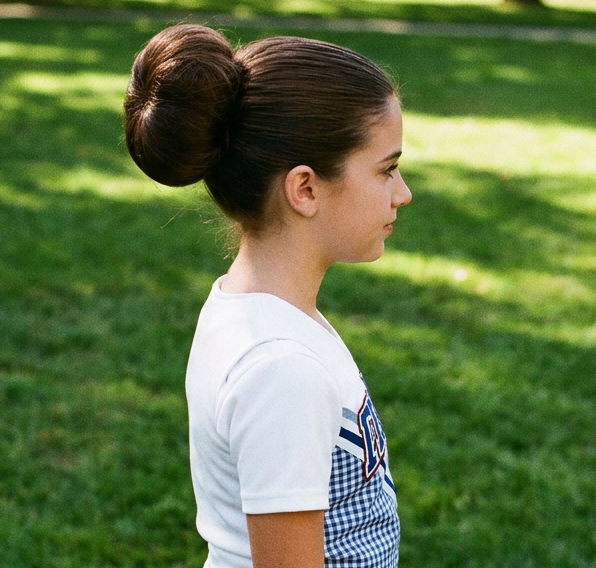
5. The Sock Bun
The sock bun is back, and is bigger, better, and more textured than the classic donut bun of years past.
Styling: Hair is gathered into a high ponytail, then wrapped around a bun maker, hair donut, or rolled sock to create a voluminous circular bun at the crown. In 2026, buns are often teased internally for more fullness, and the exterior is smoothed for a clean silhouette.
Best for: Squads with strict uniform requirements that mandate a covered, off-the-neck look.
Pro tip: Use a bun ring with grip coating to prevent the bun from sliding or spinning during movement.
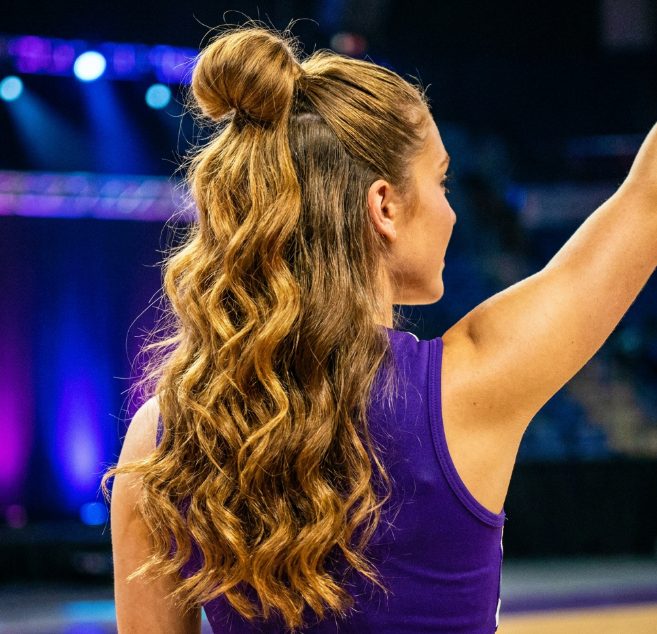
6. The Half-Up, Half-Down with Texture
This is the most versatile cheerleader hairstyle— it gives you the security of an updo with the flair of flowing hair.
Styling: The top half of the hair is pulled into a high ponytail, braided pony, or small bun. The bottom half is left down — wavy, curled, or natural — and flows behind the shoulders. In 2026, this look is especially popular with texturized waves created by braiding damp hair the night before (the “pineapple” or “braid wave” method).
Best for: Fliers and backspot positions where hair can hang down the back without interfering with stunts.
Pro tip: Curl or texturize the bottom half the night before a big event. Sleep in a loose pineapple braid to preserve the waves until game time.
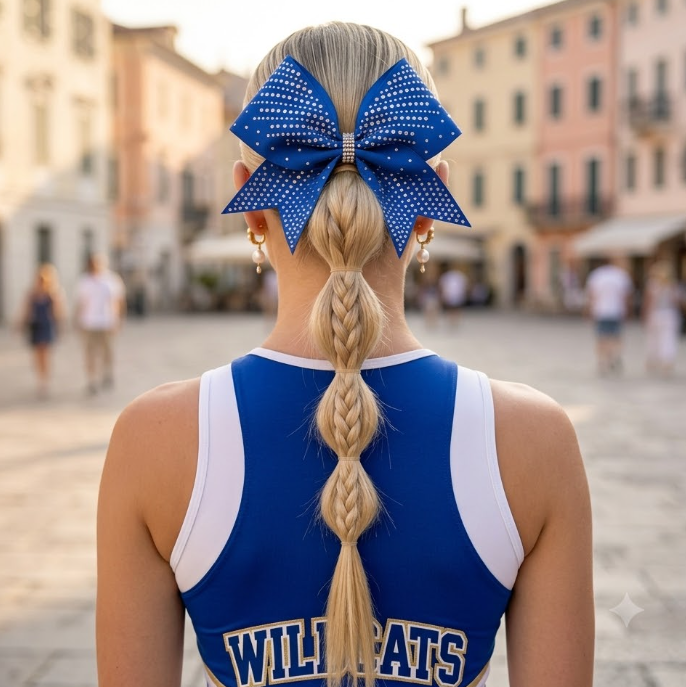
7. The Braided Bubble Ponytail with Cheer Bow
This is a classic creative competitive cheer style— a dynamic sculpted ponytail that delivers dramatic stage presence for judged routines and performances.
Styling: air is pulled into a high, taut ponytail secured at the crown, segmented with thin elastics to form rounded bubble sections, each threaded with a neat three-strand braid through its center and fluffed for dimensional contrast. An oversized royal blue rhinestone cheer bow is fastened at the ponytail base as the primary focal accent. The full backward pull tucks all flyaways away from the face and neck.
Best for: Cheerleading competitions, formal stage showcases, championship celebrations, and spotlight-focused performance events.
Pro tip: Lock each bubble segment tightly with thin elastics; tease surrounding hair gently for soft volume, then mist lightweight stronghold hairspray to prevent slippage during tumbling, stunts and jumps.
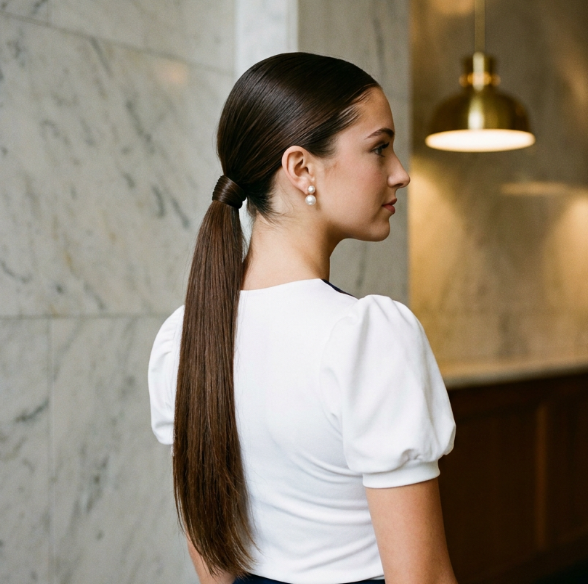
8. The Low Ponytail with Wrapped Base
A sophisticated, uniform-appropriate style that is completely secure and looks refined in every setting.
Styling: Hair is smoothed and pulled into a low ponytail at the nape of the neck. A section of hair is wrapped around the hair tie to conceal it, then pinned in place. The wrapped section creates a polished, “salon done” appearance.
Best for: School performances, formal spirit events, and competitions with strict dress code guidelines.
Pro tip: Wrap the base section with a piece of hair from the underside of the ponytail for more coverage — this hides the hair tie completely.
9. The Twisted Mini Buns (Double Bun)
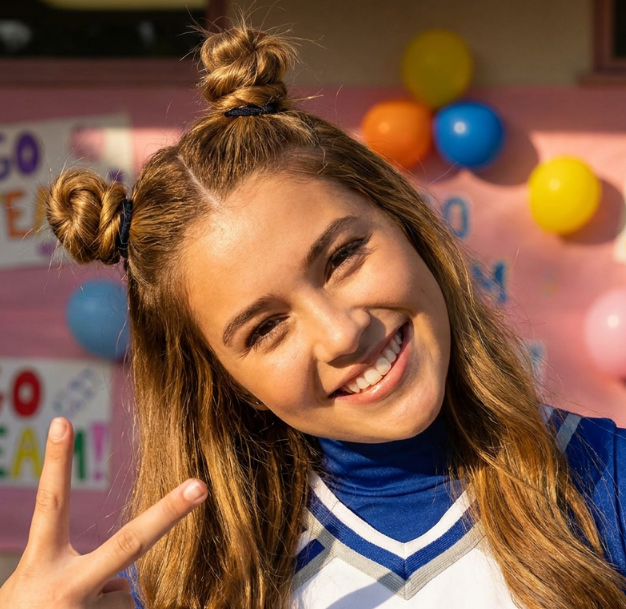
Inspired by gymnastics and anime aesthetics, the double mini bun has become a cheerleading icon in 2026. Often called the “space buns” or “fight buns,” this look is equal parts functional and fashionable.
Styling: Hair is parted down the center, creating two equal sections. Each section is twisted into a mini bun positioned on either side of the crown — like ears. Each bun is secured with pins, a small hair tie, or a bungee.
Best for: Fliers (especially small, compact fliers who benefit from having no hair below the shoulders), and any squad member who needs maximum hair security.
Pro tip: Backcomb each bun’s interior before pinning for a tighter hold. A light mist of hairspray before pinning prevents slipping.
10. The Flat Braided Bun
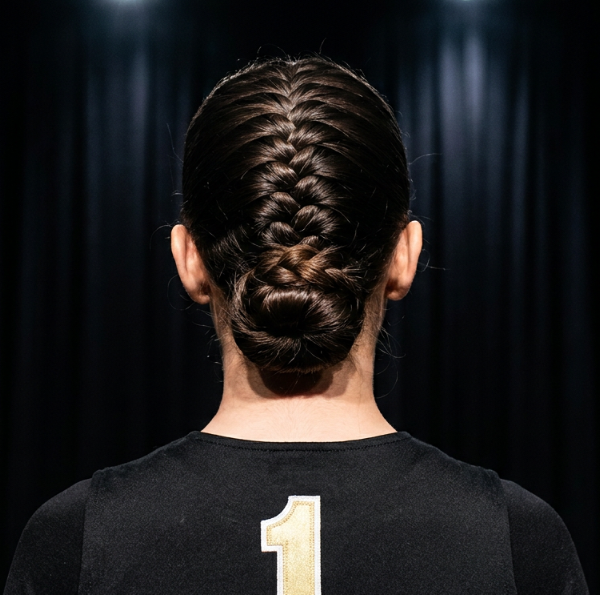
This is the neatest, most precise bun style in the 2026 cheer repertoire — a favorite of elite competition squads.
Styling: Hair is braided into a single tight braid (often a three-strand or fishtail braid) from the nape to the ends. The braid is then coiled into a flat, compact bun at the back of the head and pinned securely. No volume, no flyaways — just clean lines.
Best for: Elite competitive cheer teams, synchronized performances, and any routine where every visual detail is judged.
Pro tip: Start braiding when hair is slightly damp for the tightest possible braid. A bit of mousse or gel throughout the braid keeps every strand in place.
Cheerleading Hairstyles for Short Hair
Short hair is also permitted and practical for cheerleading performances and competitive events. The core requirements for cheer hairstyles are safety and neatness. While high ponytails and buns are classic squad hairstyles, short hair can be perfectly adapted to meet uniform and competition standards through delicate braiding, half-up styling, and matched decorative accessories.
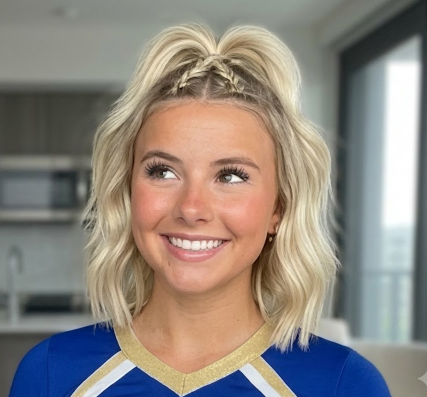
1. Two Tiny Front Braids Half-Up Style
Section out two thin hair strands from the bang/forehead zone, then weave each strand into delicate tight three-strand plaits. Cross the two finished micro braids at the crown and secure them into a high half ponytail. Leave the remaining short hair loose on both sides with soft natural wavy texture intact.
This sweet, bohemian, and upbeat cheer hairstyle tames flyaways along the hairline flawlessly while contouring all face shapes. Blending iconic Y2K and boho aesthetics, it delivers vibrant sun-kissed vacation vibes ideal for summer cheer camps, outdoor games, and music festival cheer performances. The lightweight half-up construction avoids heavy pulling on short hair, maintains full bouncy texture for stunts and dance routines, and radiates youthful, approachable energy that matches casual and daytime cheer uniforms perfectly.
2. Bubble Braid Low Ponytail
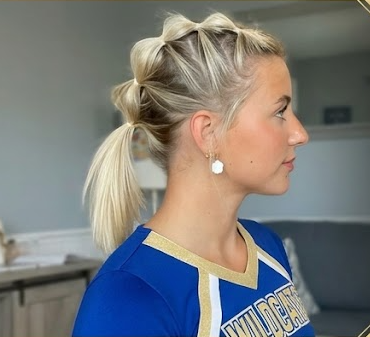
Start braiding along the hairline and occipital bone with bubble braid techniques—section, secure, and gently fluff each segment for dimensional bubbles—running the continuous woven pattern all the way back. Gather all short hair neatly at the nape to form a compact mini low ponytail. The design creates prominent layered volume at the crown with crisp, tidy ends from the side profile.
A sleek, athletic-centric cheer short hairstyle engineered for high-intensity cheer movements. Its rigid, structured braiding eliminates the common struggle of slippery short strands slipping loose during jumps, tumbling, and stunts. The sculpted bubble texture adds striking three-dimensional visual depth without sacrificing sporty practicality. It balances polished refinement and athletic functionality, making it a go-to option for competitive cheer matches, training sessions, and formal game-day routines that demand neat, long-lasting hold.
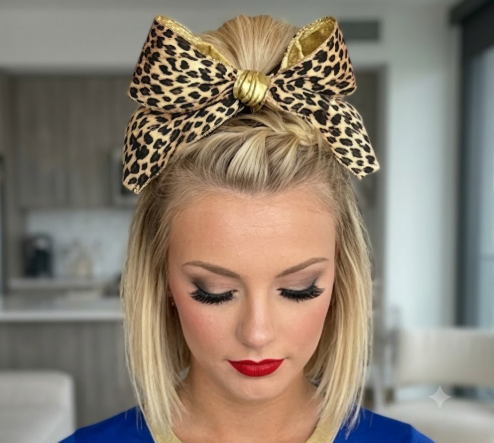
3. Dutch Braid Half-Up with Oversized Leopard Bow
Craft tight scalp-hugging Dutch inverted cornrows from the bang section, weaving additional hair into the braid as it extends backward before fastening firmly at the crown. The statement accessory—a large gold-trimmed leopard print bow—acts as the central focal point of the entire look. Keep the side bob strands smooth and straight, paired with dramatic stage makeup including full lashes and bold red lips for complete cohesive styling.
A bold, retro, high-drama signature cheerleader hairstyle built for stage visibility. The sleek Dutch braid locks down front hair completely, while the oversized leopard bow delivers powerful visual impact that stands out sharply under arena stage lights. Its striking, glamorous theatrical flair fits competitive cheer showcases, pep rally performances, themed cheer events, and pageant-style cheer appearances. The straight bob side sections create clean framing that contrasts vividly with the eye-catching bow, maximizing stage presence and team visual uniformity for spotlight performances.
The Evolution of Cheerleader Hairstyles: 2020 to 2026
Understanding where styles came from helps you anticipate where they’re going:
2020–2021: Pandemic era. Minimal styles, focus on function. Simple high ponytails and basic buns dominated as most cheerleading went virtual.
2022: The comeback. As in-person competitions resumed, elaborate braided styles surged in popularity. Double Dutch braids and fishtail ponytails became social media sensations.
2023: Texture takes center stage. The natural hair movement fully infiltrated cheer culture. Squads began embracing and showcasing diverse hair textures as a strength.
2024: The accessorizing boom. Ribbons, scrunchies, and claw clips entered the cheer hair vocabulary. Custom team-colored hair accessories became a squad identity element.
2025: The “clean aesthetic.” Ultra-smooth, sculpted, minimal styles dominated. Think: every hair in place, every edge laid, every detail intentional.
2026: The year of personal expression within structure. The pendulum swung — squads still maintain uniform standards, but 2026 celebrates individual flair within those standards. Gem parts, colored bungees, unique braid patterns, and diverse textures are all welcome as long as the foundational style meets team guidelines.
What Is the Easiest Cheerleader Hairstyle for Beginners?
The sculpted high ponytail is the easiest and most beginner-friendly cheer hairstyle. It requires only a brush, a hair tie, and a few bobby pins. Master this first, then move on to braids and buns. Double braids are the second-easiest option and are a great step up once you’re comfortable with a ponytail.
What Are the Rules for Cheerleading Hair?
All cheerleading hair must be fully fastened to stay clear of the face, eyes, and shoulders; a ponytail is the standard compliant style, with additional specifications for hair bows outlined in supplementary guidelines. Glitter is banned entirely on facial skin, hair, and competition uniforms.
Are You Allowed to Have Bangs in Cheer?
Bangs are permitted for cheer competitions under strict safety constraints. They must be firmly pinned or heavily hairsprayed to eliminate loose strands covering the eyes during tumbling and stunting. Official safety standards adopt a touch test: hair that requires manual repositioning to maintain clear sightlines violates competition rules, and stray bang strands during judged routines result in rule violations. Side-swept bang styles are widely recommended to avoid sweat-related hair slippage.
Can You Be a Cheerleader with Short Hair?
Short hair does not disqualify athletes from cheerleading participation. While high ponytails are the preferred standard hairstyle, short hair only needs to be pulled back fully from behind the ears toward the crown to meet official requirements. Judges generally do not deduct scoring points as long as athletes secure their short hair to the maximum extent feasible given their hair length.
How Do I Keep My Cheer Hair from Falling out During Tumbling?
Security is the key. Use hair bungees instead of regular elastic bands — they grip more firmly. For buns, use U-pins (bobby pins) inserted in an X-pattern for maximum hold. Apply a texturizing spray before styling to add grip. On very humid or sweaty days, a light mist of hairspray between styling layers adds extra hold. For extremely active routines, some cheerleaders use a thin mesh hair net over the bun for added security.